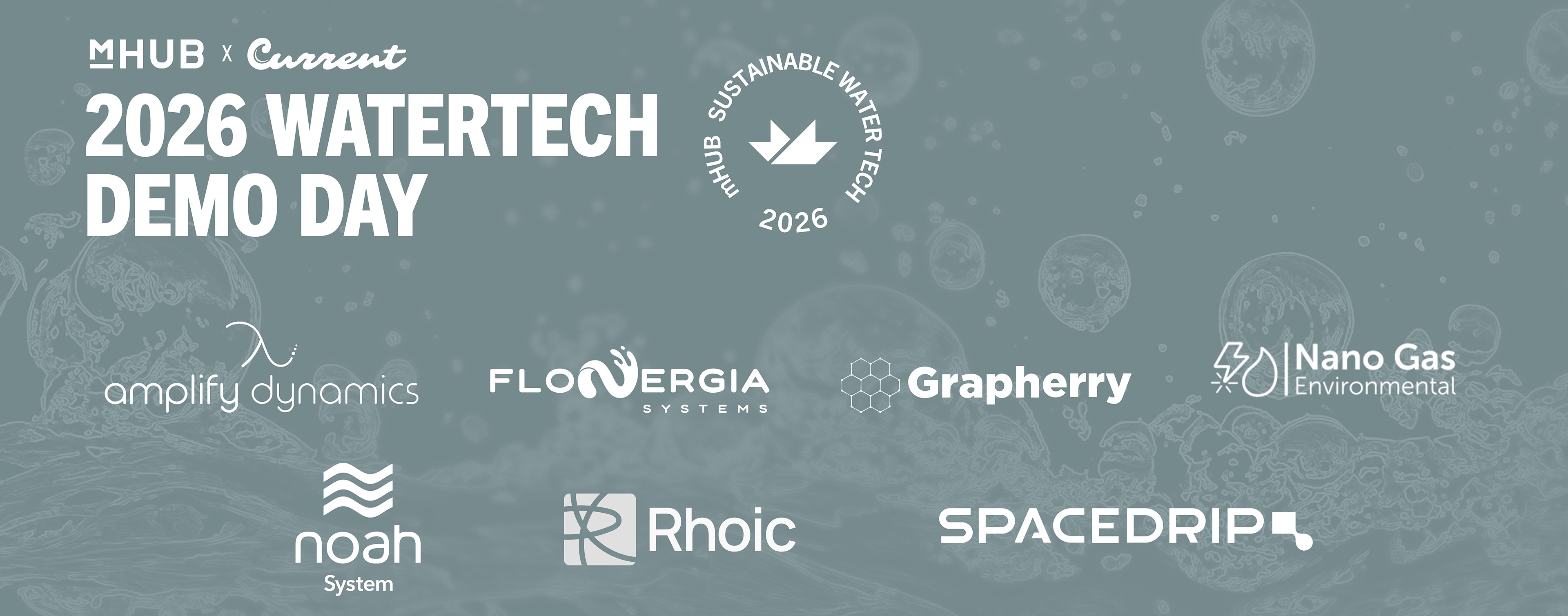
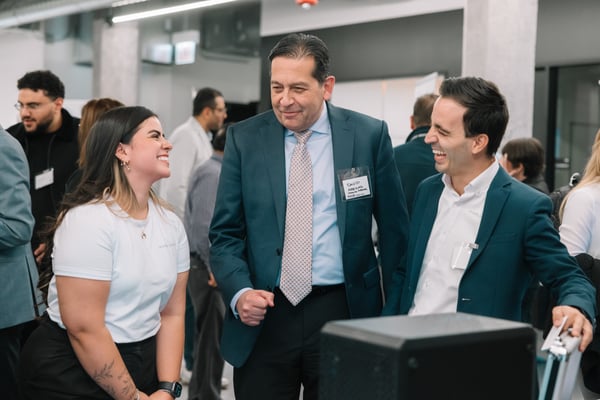
On April 9, mHUB and Current came together for the Water Tech Demo Day, a showcase of the seven cohort teams driving smart and sustainable water solutions emerging from the Sustainable Water Tech Accelerator. Before an audience of industry leaders, investors, and sustainable manufacturing innovators, these startups demonstrated how far they've come and where they're headed.
Launched in partnership between mHUB and Current, the Sustainable Water Tech Accelerator is built within mHUB's hardtech commercialization platform and anchored by the Great Lakes ReNEW. The day opened with remarks from mHUB's Chief Experience Officer Melissa Lederer and Current's CEO Alaina Harkness, who together framed the partnership's shared vision for advancing water innovation and connecting startups with industry. From there, mHUB Accelerator Executive Director Thierry Van Landegem and Current's Chief Commercial Officer Nina Dudnik took the stage to mark the program's milestone moment, reflecting on the journey since October 2025, as cohort teams moved through discovery, design, and development to arrive at Demo Day ready to deliver.
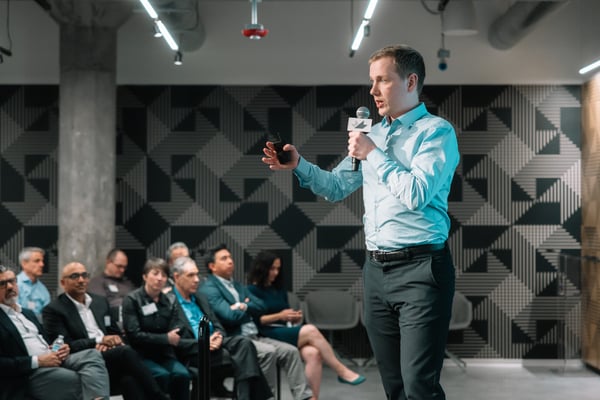
Each of the seven teams took the stage to present their solution and the progress made throughout the program. From resource recovery and contamination removal to water and energy efficiency, the cohort represented a broad and complementary toolkit for tackling some of the most pressing water challenges facing industry today and offered a glimpse of what deployment at scale could look like. Here's a look at the cohort:
Amplify Dynamics (Chicago, IL) – replaces traditional analog hardware filters with a programmable digital contactless system, using ultrasound waves to separate micro and nano particles and other contaminants from water. This digital approach is designed to eliminate clogging, reduce waste, and prevent yield loss.
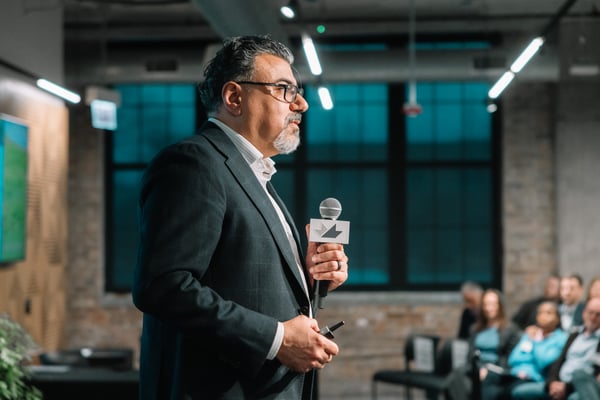
FloNergia (Dundas, Ontario, Canada) – drives the future of water systems with richer flow and lower energy use. Its patented FloMov™ technology uses air instead of mechanical components to move and aerate water efficiently — with no moving parts — achieving 50–70% energy savings compared to traditional systems while significantly reducing maintenance costs. Designed to handle complex liquid-solid mixtures, FloMov™ is already in operation across wastewater treatment and aquaculture facilities, delivering more sustainable and cost-effective operations.
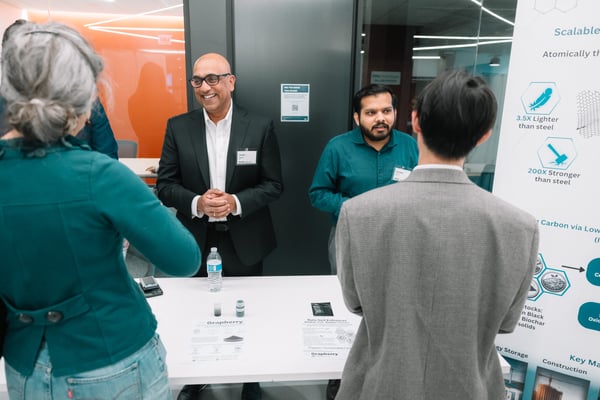
Grapherry (Chicago, IL) – is a graphene refinery that upcycles waste into customizable, high-performance graphene materials. By refining low-value inputs like biosolids and biochar into low-cost, high-quality graphene and graphene oxide at industrial scale, Grapherry serves the energy, infrastructure, and agriculture sectors with materials built for performance.
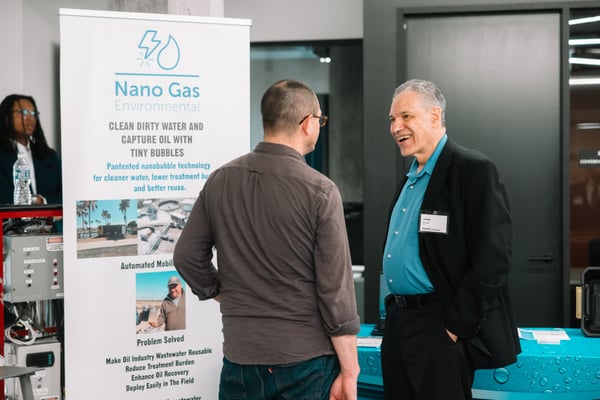
Nano Gas (Deerfield, IL) – cleans contaminated water with the power of tiny bubbles. Its technology treats oil industry wastewater and makes it reusable, delivering up to 90% savings on round-trip water costs while eliminating seismic risks associated with wastewater disposal. Nano Gas™ is finalizing an agreement with Mercer International to accelerate its penetration into the oil and gas market.
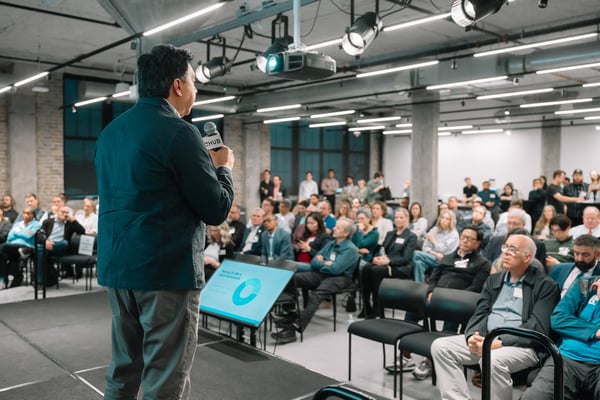
Noah System (Chicago, IL) – addresses a critical public health challenge with an automated water quality maintenance system designed to reduce lead exposure in drinking water. Built for schools, commercial facilities, and homes, Noah provides a simple, scalable solution that protects water quality without manual flushing or costly infrastructure replacement — and has already been deployed in Chicago Public Schools, where lead levels were reduced well below action thresholds.
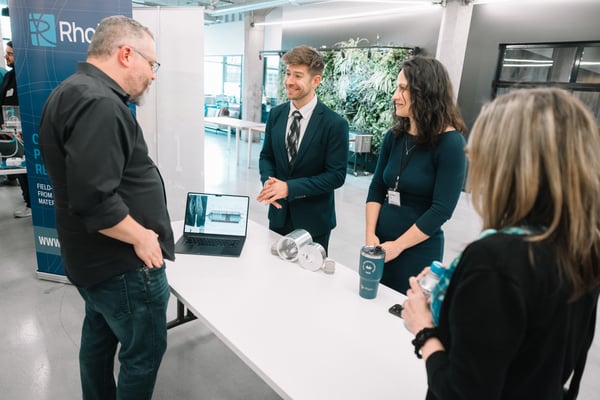
Rhoic (Emeryville, CA) – uses field-induced reactor technology enables high-efficiency chemical production without extreme heat or pressure. By harnessing electrical fields, Rhoic produces critical industrial chemicals from air and water on-site, achieving 70%+ reductions in emissions and energy use. The company is starting with fixed nitrogen, given its broad applications across aerospace propellants, fertilizers, and climate impact.
Spacedrip (Tallinn, Estonia) – automated wastewater reuse systems enable water access anywhere by closing the loop on water use. Its compact, modular solutions are purpose-built for remote infrastructure and environments, with the capacity to serve communities of up to 2,000 people.
The progress made by each startup throughout the Sustainable Water Tech Accelerator reflects how critical new technologies are to addressing complex water challenges across industry.
With the right combination of capital, technical support, and industry access, these teams are building momentum toward pilot deployment and long-term commercialization, helping drive more sustainable and efficient water systems.
Learn more about the 2026 mHUB & Current Water Tech Accelerator teams and schedule a meetings 1-on-1 meeting with them here.